2200 words: 12 minute read. Click images to enlarge.
Statements given to Saving Tournerbury Woods (STW) by the woodland owners in open legal correspondence on 12th September 2025 are quoted below in green next to the photos we obtained and shared with the owners. STW commentary is given in orange. The owners have had an opportunity to comment on this page and changes have been made at their request.
Given the concerns we have had over tree loss we made reports to Havant Council and the Local Government Ombudsman who can make definitive judgments. This page is a tough read, but the issues at the heart of how we protect trees in our precious SSSI nature reserves across the country.
The air photos below show the location of the 4 example trees in 2012 and 2018.
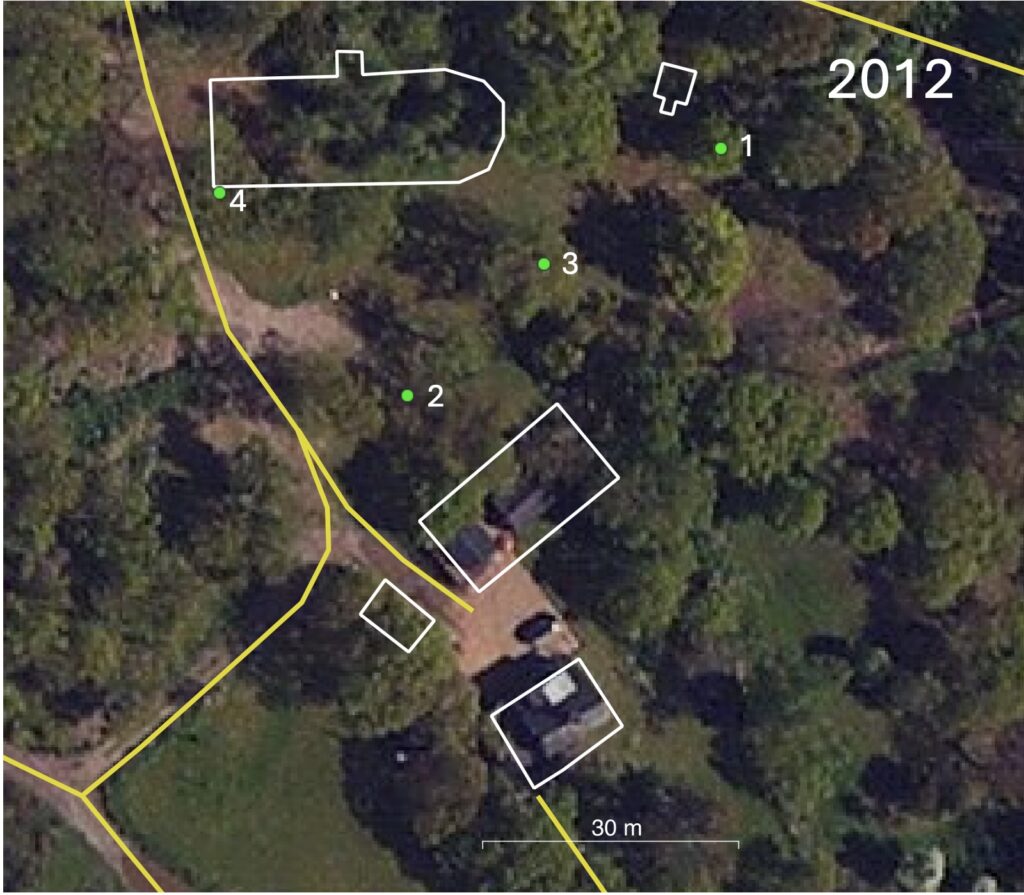
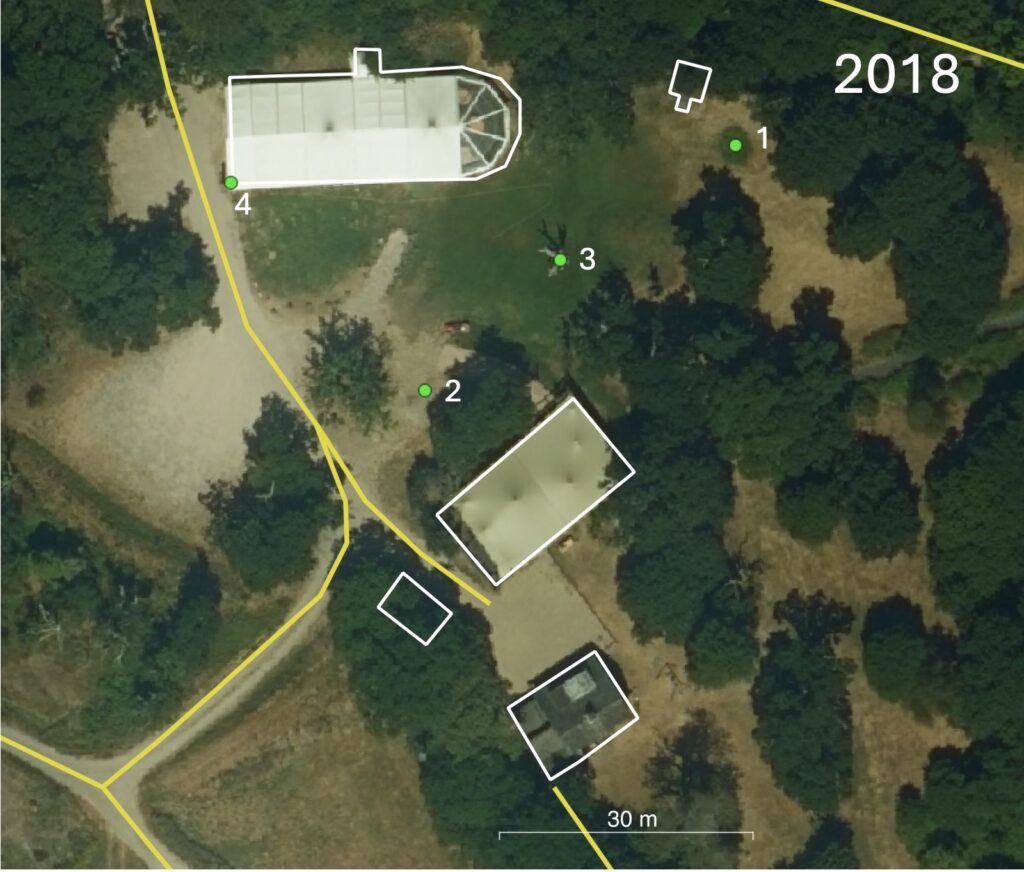
The owners stated position in legal correspondence on 2nd October 2025 was:
“[W]oodland management in accordance with the SMS, including the removal of dead wood, clearly falls within the statutory exemption to which we referred (established by regulation 14(1)(a)(ii) of the 2012 Regulations) and which is clearly not subject to regulation 14(2).”
This Regulation 14(1)(a)(ii) of the 2012 Tree Regulations says:
“Nothing in regulation 13 [protecting trees] shall prevent the cutting down, topping, lopping or uprooting of a tree in compliance with any obligation imposed by or under an Act of Parliament or so far as may be necessary for the prevention or abatement of a nuisance”
Regulation 14(2) of the 2012 Tree Regulations says
Where paragraphs (1)(a)(i) or (1)(c) apply [dead or dangerous trees], notice in writing of the proposed activities shall be given to the authority
The Natural England Site Management Statement (SMS) (management agreement) says:
6.1d “Fallen and standing dead wood is to be retained as far as possible… [w]here removal … of timber is necessary, wherever possible, butts and root plates of the trees should be left in situ”
A plain reading of the 2012 Tree Regulations in 14(2) says that if a tree died or is dangerous and is removed, notification needs to be made to the local authority under the Tree Preservation Order (TPO). We asked Havant Council and they told us that no notifications of this kind have been made for Tournerbury Woods even though trees have been removed.
However, the owners say that the exemption in Regulation 14(1)(a)(ii) means that the prohibition on ‘cutting down, topping, lopping or uprooting of a tree’ in the TPO does not apply if any Act of Parliament ‘imposes an obligation’ on the owners. They argue that as there are obligations in the Natural England legally required management agreement (SMS), therefore this exemption applies to all woodland management in Tournerbury Woods.
This would be an extraordinary claim if true because it says that any SSSI nature reserve with a management agreement (SMS) with a TPO is not covered by the 2012 Tree Regulations, and instead the provisions of the management agreement relating to trees actually apply.
In this case, the rules in the management agreement (SMS) dating back to 1997 have riders like ‘as far as possible’ for the woodland management provisions, and read literally this means that the owners would have a wide discretion on their treatment of trees if the SMS, and not the TPO, sets the rules for woodland management.
However, there are two other considerations. Firstly, what are the ‘obligations’ relating to trees in the management agreement (SMS)? They are actually very limited, for example, 6.6 says ‘To conserve the [ancient monument] feature requires appropriate woodland management’. Mynors says in his famous ‘Law of Trees’ book that ‘for this exemption [14(1)(a)(ii)] to apply, the legislation in question must impose an obligation, not merely authorise something to be carried out’. It is therefore likely that the TPO still applies everywhere where there is no specific obligation in the management agreement.
Secondly, the exemption in 14(1)(a)(ii) only covers ‘cutting down, topping, lopping or uprooting of a tree’, and does not cover two other prohibitions in the TPO saying ‘no person may… ‘wilfully damage’ (13e) or ‘wilfully destroy’ (13f) any tree in a TPO. We have shown in our page on Tree preservation that a large earthwork platform now stands where number of trees stood in 2012, and we show how 3 specific trees around the edge of this platform had their roots covered to a depth of 1.2m by this earthwork and they subsequently died. These actions may engage these 2012 Tree Regulations that are not covered by the exemption in 14(1)(a)(ii) requiring the death or removal of trees to be reported to the local authority.
In summary, we believe there are some limited exemptions to the 2012 Tree Regulations in 14(1)(a)(ii), where the management agreement (SMS) can be seen to override the TPO with respect to specific obligations relating to sapling growth into maturity and protection of the veteran trees within the ancient monument.
However, where the intervention with the tree is more drastic such as the removal of the entire tree crown leaving a 3m high bare trunk (Tree 3 below), we do believe this is outside the exemption in 14(1)(a)(ii) and should have been notified to the local authority under the TPO provisions.
It is very important to clarify the law in this situation because if TPO protection is overridden by old and poorly drafted management agreements, this would be a major loophole in statutory protection for trees in SSSI nature reserves with a TPO.
Tree 1
Owners of Tournerbury Woods: “The tree failed gradually over a number of years; as the photo taken in September 2014 shows, it was already largely dead even then. [We] did [our] best to retain the tree and to keep it alive for as long as possible, through active management including the removal of dead branches (as [we] were, and are, entitled and indeed required to do). Sadly, after a number of years of management this tree failed and had died entirely by the winter of 2017/18. The decomposing wood was retained on the Woodland floor to safely decay and encourage the ecosystem there. The butt and root of the tree remain where they were and are still there.”
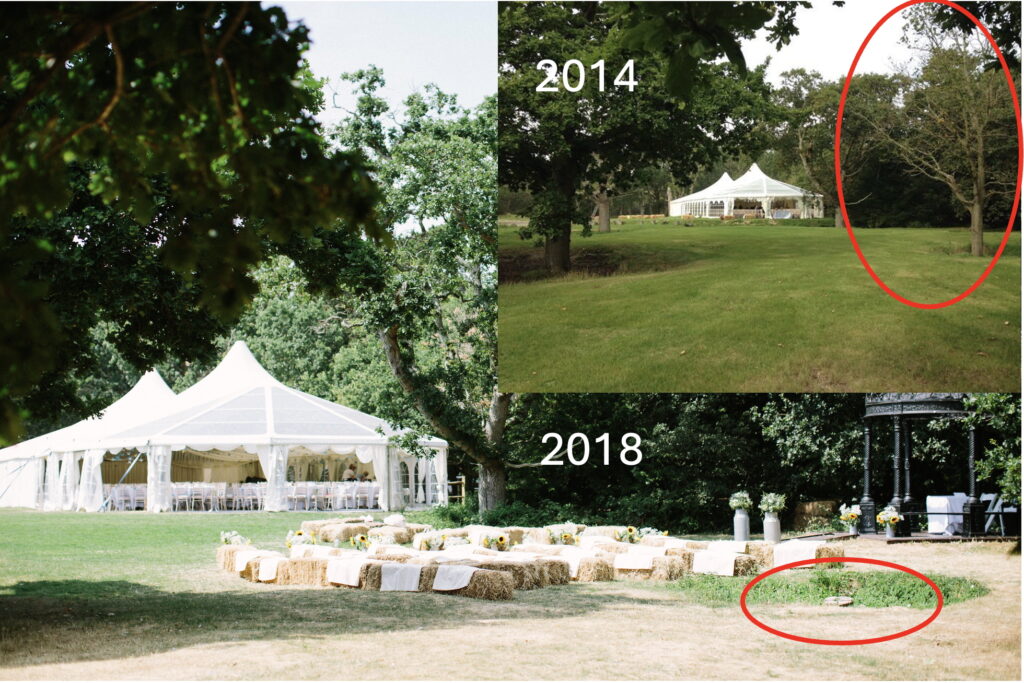
STW says: Tree 1 was buried by an earthwork platform in 2013 and left in a dip with roots covered. We believe such loading of the roots by material is very prejudicial to the survival of a tree as British Standard 5837: 2012 indicates in section 4.6 on root protection areas and this may be ‘wilful damage’ to the tree, not covered by either exemption in 14(1)(a)(ii) of the 2012 Regulations. At some point before 2018, the tree, or its remains if dead, was removed by cutting to leave a stump. We believe this should have been reported to the local authority under the 2012 Regulations 14(2) and this was not done.
Tree 2
Owners of Tournerbury Woods: [We] believe that [the top photo] was in fact taken in the summer of 2013. [We] are in possession of photographs dating back to at least 2001 which demonstrate that this tree was in increasingly severe distress with fungal rot and saltwater suffocation, displaying a large amount of dead wood and very little crown, and with surrounding trees on higher ground in better health and those on the same level also under stress or already dead for the same reasons. It has been confirmed by a qualified tree expert that this tree was decaying and dying and had a fungus that was likely to be contributing to that failure. Furthermore, the tree had a very limited root ball, was completely unstable and as a result failed naturally. [We] did what [we] could to bring the tree back to life by aerating the root system and providing additional nutrients which prolonged its life. However, by 2014 the tree had succumbed to the fungal rot particularly at its base. The deadwood was retained on the Wood floor after the tree had failed in line with best practice and our obligations under the [Natural England management agreement].
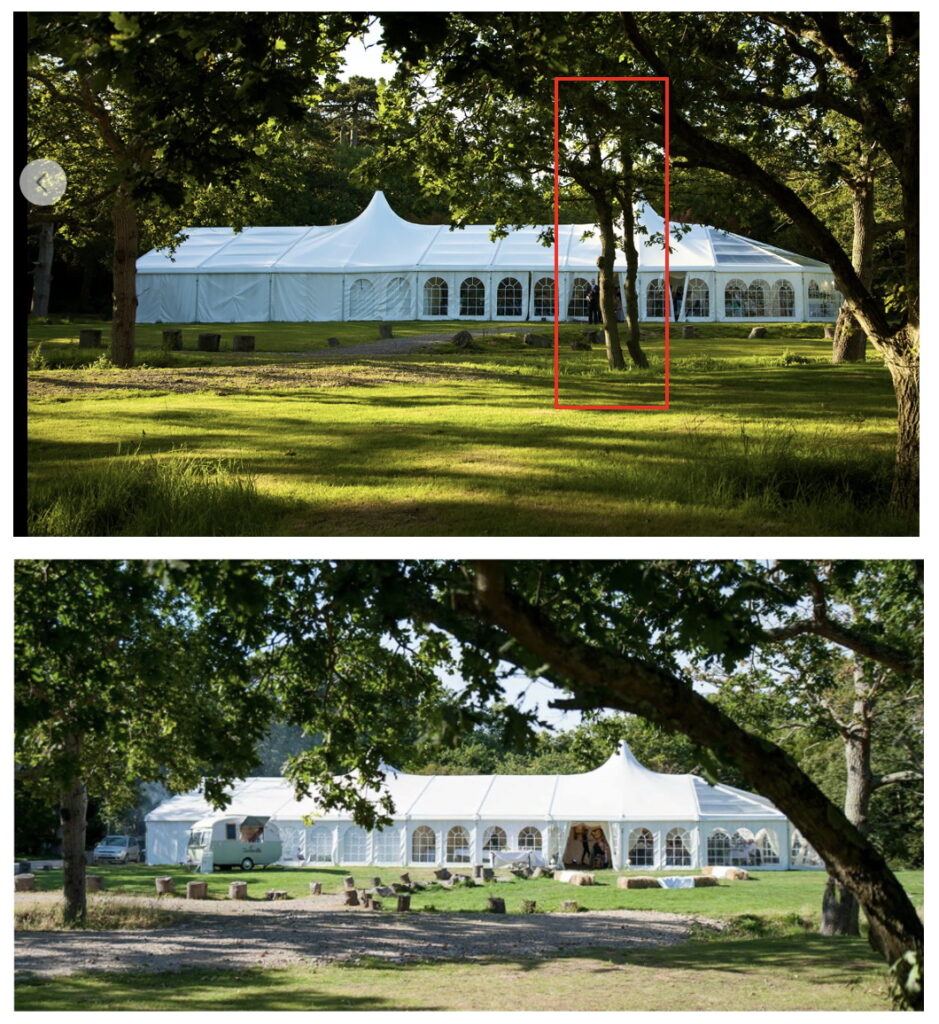
STW says: this tree was present in 2013 and was removed at some point in 2014 and the owners have told us in December 2025 correspondence that the butt and root plate were not retained in situ as it uprooted fully. This would have conflicted with venue operations at this location but there is no obligation in the management agreement (SMS) to move the dead tree remains elsewhere. We do not believe that the limited obligations in the management agreement (SMS) permit this removal to another place under the claimed exemptions in 2012 Regulations 14(1)(a)(ii). We believe that this removal should have been reported to the local authority under the 2012 Regulations 14(2) and this was not done.
Tree 3
Owners of Tournerbury Woods: Clearly, this tree had died long before the photographs [you] have provided were taken. [We] are in possession of photographs which show that this tree had died as early as 2013, causing the crown to fail completely. [T]he top of this tree had been falling down for some time and eventually came down entirely in a storm. It was not topped unnaturally as [you] imply and [we] have photographs of the dead crown. As part of [our] active dead wood management as required by the SMS, the trunk was maintained for as long as possible. Indeed, [your] photographs show the trunk throughout a number of years as a clear example of this appropriate management. The trunk had rotted to the core and the deadwood was retained and allowed to decompose on the Woods floor.
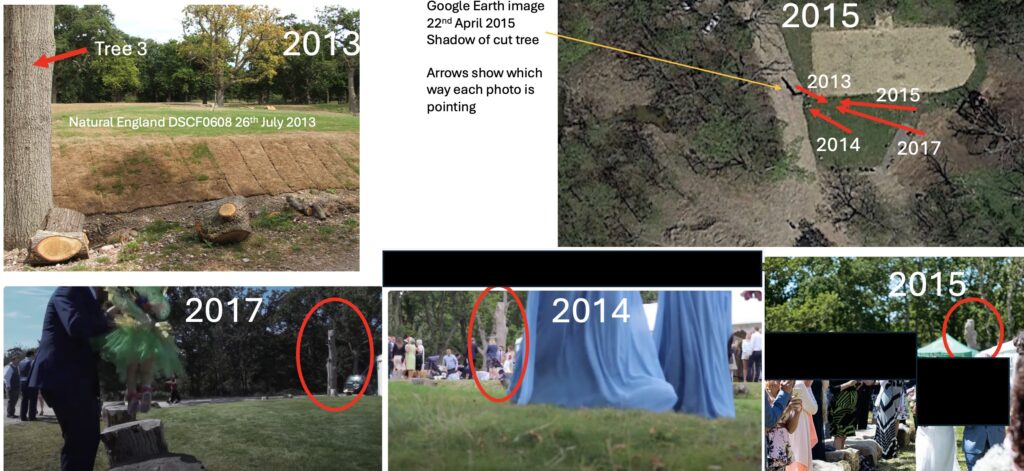
STW says: photos of this tree show a clear cut across the trunk at c. 3m above the ground from 2013 onwards and yet it looks perfectly healthy in the air photo of 2012 (see air photo above). No tree can survive surgery of this drastic kind… we believe that if it experienced weather damage as the owners say the undamaged parts should have been allowed to re-grow. We do not believe that the claimed exemptions in 14(1)(a)(ii) relating to the limited obligations in the management agreement (SMS) actually permit this intervention. The tree trunk was clearly left in position once it had died and it was eventually removed after 2017 and left flush with the surface of the gravel track without notification to the Council under the 2012 Regulations 14(2).
Tree 4
Sadly, and most likely due to the nature of the land on which it is situated … the tree had started to deteriorate by 2012 which can be seen in the photographs you have provided. A photograph that [we] took in 2013 shows this tree with a considerable amount of deadwood and fungal rot, particularly on the branches and boughs of the crown. The tree was left in situ to rot, providing another clear example of our leaving dying and dead trees in situ; however where branches rotted and died the ends were tidied in order to slow the rate of the decay for the remaining tree. However, by 2014, the tree was severely distressed and many of the branches and boughs were totally rotten and unsafe. The first bough fell naturally in 2016 and the end was treated in an attempt to slow decay. In 2016, Storm Angus and then the 2017 Storm Doris caused the rotten canopy and further branches to fall. This tree was inspected by three tree officers in 2017 … and the management of this large and dead/ decomposing tree was endorsed by them. Once the trunk of the tree had significantly rotted, the dead wood was left to decompose on the Wood floor.
[We] worked hard to ensure that this tree was maintained in place for as long as it was safe to do so, as the photographs clearly show. [We] completely reject the suggestion that this tree was lopped in order to make way for the venue platform, which was not extended but simply had a small gradient added for safety reasons which would not have affected this tree whatsoever. The ‘large patch of bare earth’ to which you refer is in fact a thin layer of topsoil to encourage new grass growth because the grass was dying due to saltwater intrusion; this was physically inspected and approved by Natural England and is permitted within the Business Amenity Area. [We] are fully satisfied that their management of this (dying, then dead) tree was entirely proper and in compliance with [our] obligations, including under the SMS.
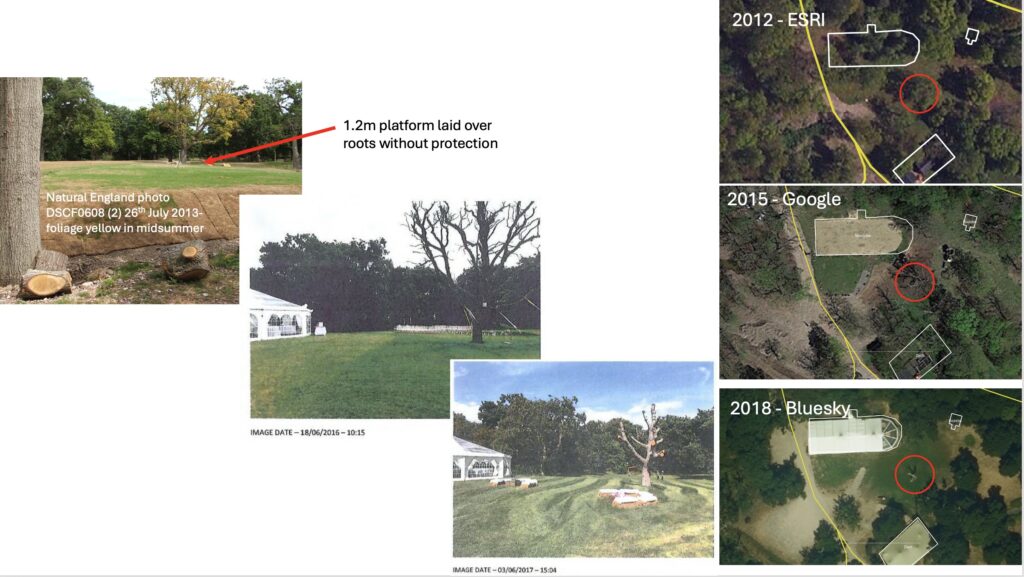
STW says: the original platform constructed in 2013 was constructed immediately adjacent to this tree and covered at least half of its roots by 1.2 m of earthwork material. We believe such loading of the roots by material is very prejudicial to the survival of a tree as British Standard 5837: 2012 indicates in section 4.6 on root protection areas. This construction work may be ‘wilful damage’ to the tree, not covered by either exemption in Regulation 14(1)(a)(ii). This tree was 125m from the sea and we can see no evidence of saltwater damage to trees not buried by earthworks. The tree was clearly left in position once it had died as required, but it was eventually removed after 2018 without notification to the Council leaving a smooth lawn space behind.
December 2025 update